03 December 2025
Why Hybrid Payments Have Made Single-Purpose POS Terminals Obsolete
As Indian consumers adopt multiple payment modes, businesses are discovering why card-only POS terminals no longer fit real-world operations.

03 December 2025
As Indian consumers adopt multiple payment modes, businesses are discovering why card-only POS terminals no longer fit real-world operations.


For a long time, choosing a POS terminal was a fairly straightforward decision. You needed something that could process card payments reliably, connect to a bank, print a receipt, and survive a busy counter. If it did those things, it passed.
That mental model no longer holds.
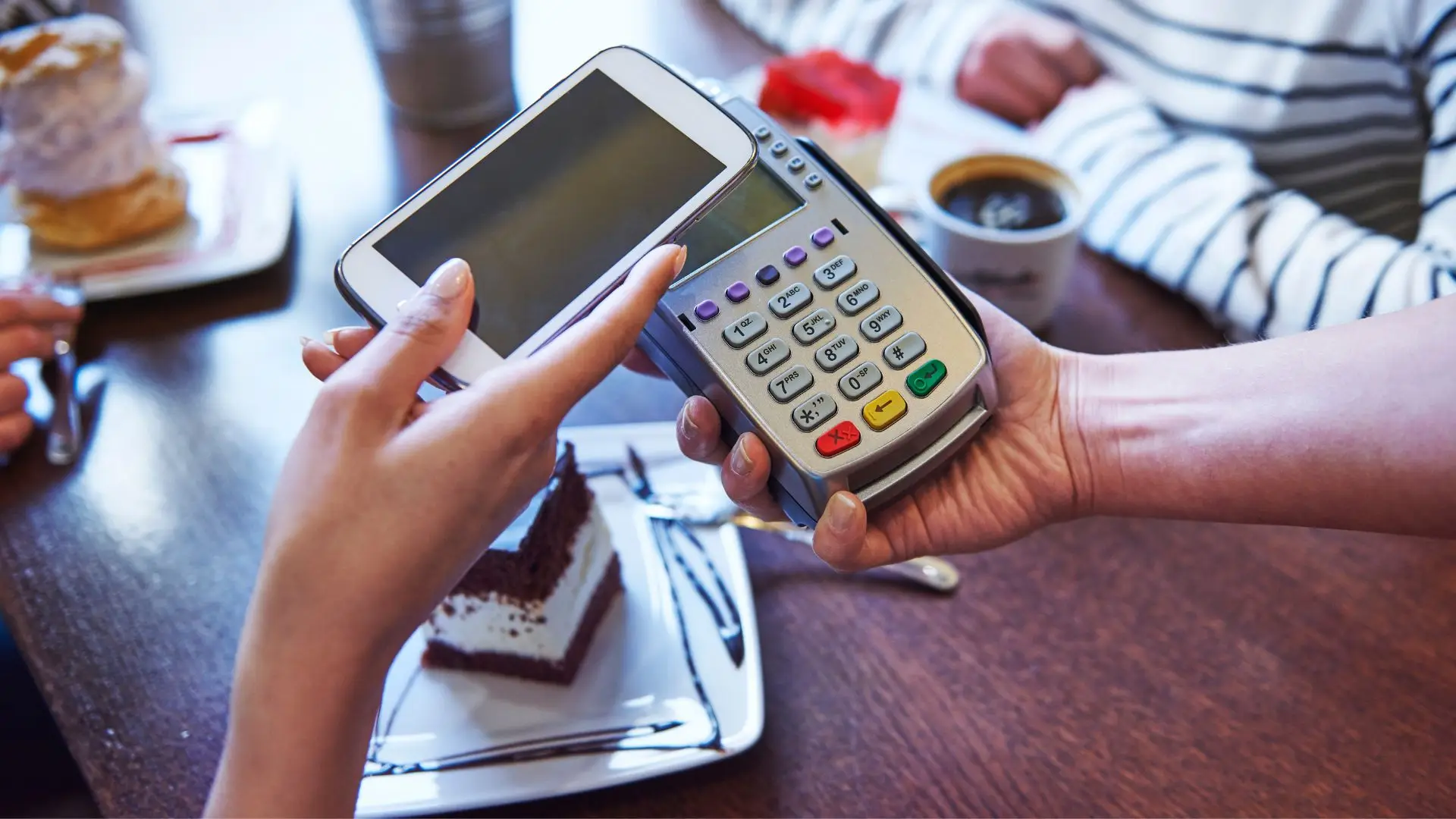
Today’s checkout in India is no longer a single moment or a single payment rail. It’s a convergence point. Cards, UPI, QR codes, wallets, contactless taps, often all used by different customers within the same hour, now coexist at the same counter. The device sitting there isn’t just processing transactions anymore; it’s mediating choice, speed, and trust.
This shift hasn’t happened overnight, but it has happened decisively. And it has left a growing category of hardware quietly behind: single-purpose POS terminals built for a world that no longer exists.
There’s a common misconception that UPI and QR payments reduced the relevance of POS devices. In reality, they changed what a POS device needs to be.
Customers didn’t stop using cards when UPI became mainstream. They added UPI to their habits. Tap-to-pay didn’t eliminate QR; digital wallets didn’t eliminate cash entirely. Instead, payment behaviour became layered. The modern Indian checkout is hybrid by default, not by exception.
For merchants, this means that a terminal designed to handle only one mode of payment creates friction the moment a customer asks for another. That friction is subtle, but it accumulates. Queues become slow, staff has to improvise, the checkout becomes messy.
Hybrid payments don’t demand more devices. They demand smarter ones.
Single-purpose terminals often survive longer than they should because they technically still work. They process card transactions. They connect to the network. On paper, they’re not broken.
But in practice, they start creating inefficiencies that are harder to quantify. Staff training becomes fragmented. One flow for cards, another for QR. Troubleshooting becomes guesswork. When something fails, it’s unclear whether the issue is with the bank, the app, the network, or the hardware.
For growing businesses, especially those expanding beyond one location, this inconsistency becomes expensive. Not immediately, but steadily. Operational complexity creeps in where simplicity used to exist.
This is where the idea of a “POS terminal” quietly shifts from being a payment tool to being a checkout system. And systems, unlike devices, need to adapt.
A few years ago, supporting multiple payment modes felt like an upgrade. Today, it’s table stakes.
Customers expect to choose how they pay without explanation or delay. Merchants expect their terminals to support that choice without workarounds. The moment a device forces a compromise, it feels outdated, even if the hardware itself is relatively new.
Modern countertop and smart POS devices are now built with this expectation baked in. Terminals such as the F210, F300 and F310 are designed to handle card payments, contactless transactions and QR-based flows within a single interface, without asking the merchant to rethink their setup every time payment behaviour shifts.
The value here isn’t technical novelty. It’s operational calm. One device. One workflow. Multiple ways to pay.
Another subtle shift in hybrid payments is where they happen. Not every transaction is neatly anchored to a fixed counter anymore.
Retailers move displays. Service businesses take payments at the point of service. Temporary setups such as exhibitions, seasonal counters, and pop-ups are no longer edge cases. They’re normal.
This doesn’t mean every business needs a fully mobile POS. But it does mean terminals need to be flexible enough to adapt to different layouts and usage patterns without becoming fragile or awkward.
Smart POS devices with larger touchscreens and Android-based interfaces have gained ground precisely because they bridge this gap. They behave like familiar digital tools while still performing the core function of secure payment acceptance. In that sense, devices like the F300 and F310 aren’t chasing innovation for its own sake; they’re responding to how retail and service environments actually function today.
Interestingly, this change is being driven as much by buyers as by end customers.
Procurement teams and system integrators are no longer evaluating POS hardware solely on transaction success rates. They’re asking different questions:
These questions naturally push decision-makers away from single-purpose terminals and towards platforms that can absorb change without constant replacement.
This is where hybrid-ready POS hardware becomes less of a “feature upgrade” and more of a risk-management decision.
There’s another, less discussed benefit of hybrid POS devices: data consistency.
When multiple payment modes run through the same terminal and interface, reconciliation becomes easier. Reporting becomes cleaner. The business sees its transactions as one flow rather than fragmented streams.
This matters not just for accounting, but for understanding customer behaviour. Which payment modes dominate at which times? How do preferences shift by location or day? These insights are difficult to extract when payments are split across loosely connected systems.
A unified POS device becomes, unintentionally, a better observer of the business.
None of this means that single-purpose POS terminals stop working tomorrow. Many will continue to operate for years.
But their relevance is shrinking. Not because they’re unreliable, but because they’re inflexible. In a market where payment behaviour evolves quickly and unevenly, rigidity becomes a liability.
Hybrid payments haven’t killed the POS terminal. They’ve simply raised expectations of what it needs to handle quietly, without fanfare.
The most resilient POS investments today are not the ones chasing every new payment trend. They are the ones built around a simple assumption: change will continue.
Terminals that support hybrid acceptance, adapt to different retail formats, and maintain a consistent user experience give businesses room to grow without revisiting hardware decisions every few years.
Devices like the F210, F300 and F310 fit into this thinking not because of how many boxes they tick on a specification sheet, but because they align with how Indian checkouts actually operate now.
In that sense, the real shift isn’t technological. It’s conceptual.
A POS terminal is no longer just a card machine. It’s the point where multiple payment worlds meet. Hardware that understands this will remain relevant. Hardware that doesn’t will quietly fade into the background, still functional, but increasingly out of place.