17 December 2025
The F55: A Modern Payment Terminal for a Rapidly Evolving India
A market once dominated by cash, has maturely pivoted towards digital payments, hybrid acceptance models and mobility-first commerce.
17 December 2025
A market once dominated by cash, has maturely pivoted towards digital payments, hybrid acceptance models and mobility-first commerce.


For businesses, this brings an opportunity and a demand: the tools they use must keep pace with these shifts.
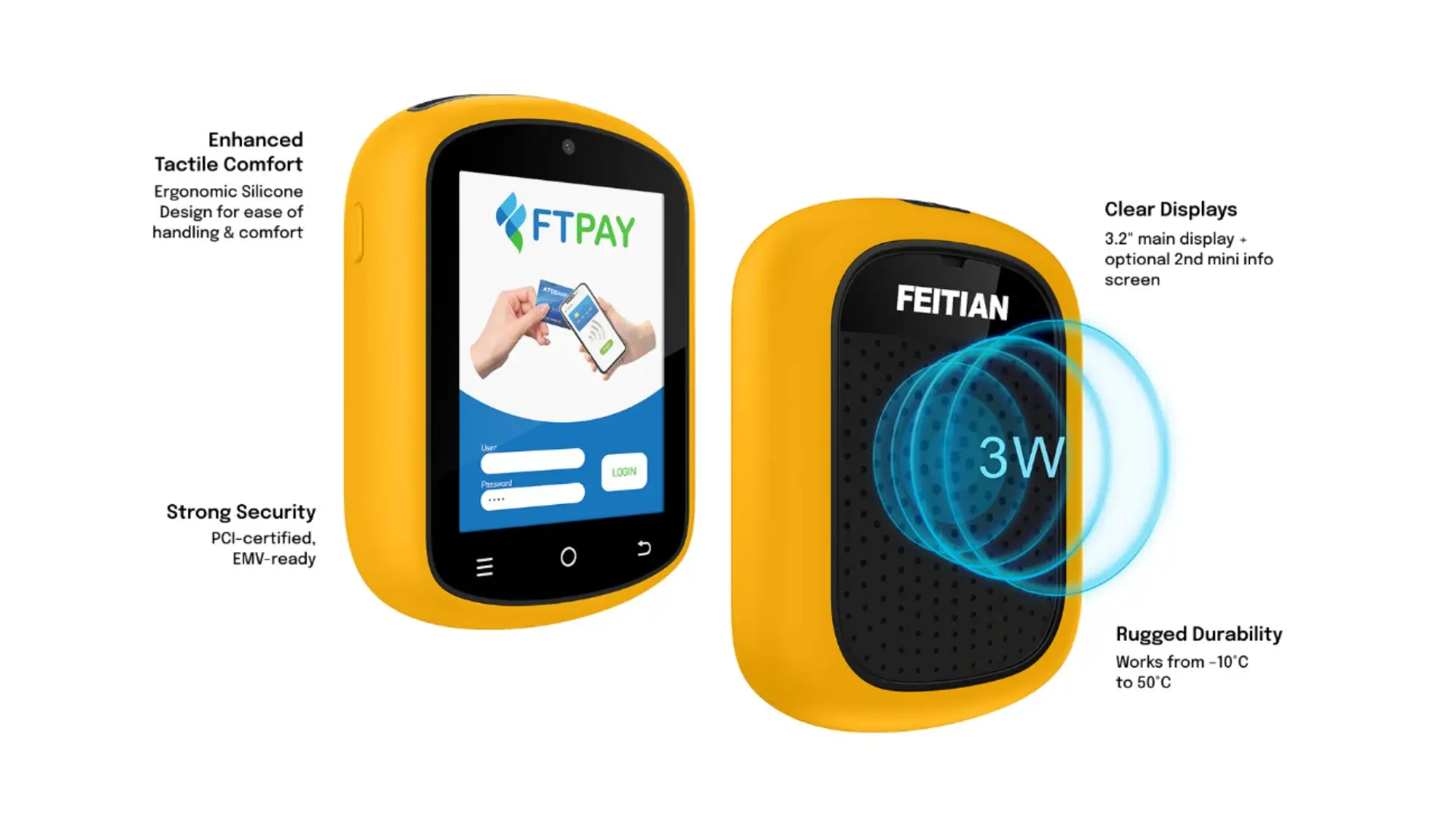
Terminals must support multiple payment modes, adapt to hybrid retail and mobile settings, integrate with broader enterprise systems, and withstand the realities of Indian business conditions. The F55 is designed with these needs front of mind. The F55 is a modern payment terminal built keeping the context of transactions in which they happen in mind.
The F55 comes in 3 variants:
Digital payments in India aren’t just about convenience. They influence:
All of these pressures converge on one piece of hardware: the payment terminal. And not just any terminal, one that handles the realities of India’s payment ecosystem.
The F55 strikes a balance between capability and usability, offering a compelling blend of features that support modern payment requirements:
The F55 supports multiple payment methods:
This hybrid acceptance isn’t a luxury, it’s quickly becoming a necessity. Consumers expect choice. Merchants need flexibility. A terminal that handles only one paradigm risks becoming a bottleneck rather than an enabler.
Whether it’s a fixed retail counter or a mobile pushcart in a market, the F55 adapts. Minimising dropped transactions and allowing sales wherever business takes place.
This translates to fewer errors, shorter queues, and better customer satisfaction.
This means a merchant doesn’t just get a payment device, they get one that performs predictably under load.
Modern terminals aren’t islands. They often need to integrate with broader systems: inventory, billing, ERP, loyalty platforms or CRM applications. The F55’s architecture supports peripheral connections and software integrations that help it play well in larger business ecosystems.
These are the features organisations need in a market where commerce is shifting faster than ever.
Small and medium retailers
From neighbourhood boutiques to multi-branch boutiques in smaller towns, the F55 offers hybrid payment acceptance without complexity. Shops can process cards, support mobile wallets, and accept QR-based payments with equal ease.
Mobile vendors and temporary setups
Stalls at events, food trucks, or seasonal markets don’t have the luxury of fixed infrastructure. With cellular connectivity and robust battery management, the F55 keeps transactions flowing regardless of location.
Hospitality and service industries
Restaurants, salons, and service providers benefit from intuitive interfaces that reduce friction at checkout. Quick transaction times and broad payment support improve customer experience and speed up table turnover.
Enterprises and chain stores
For larger organisations looking to standardise payment infrastructure across locations or integrate terminals with backend systems, the F55 provides both scalability and consistency of experience.
The F55 is, first and foremost, a payment terminal. But modern business logic demands that such devices be versatile. Whether it’s linking sales to inventory, generating audit trails for compliance, or interfacing with enterprise reporting tools, the terminal becomes part of a data-driven business fabric.
For procurement teams and IT leaders, this means fewer point solutions, lower administrative overhead, and greater reuse of hardware investments across functions.
Digital payments have matured. The devices that enable them must keep up, not just technically but operationally. The F55 does not chase every shiny feature in isolation, it focuses on what matters to merchants and organisations:
This makes it suitable not just for today’s payment demands, but for the evolving ways in which Indian commerce operates.
If your organisation is evaluating payment infrastructure that has to perform reliably across locations, models, and use-cases the F55 is a compelling, practical option to consider.