29 April 2026
A Comparative Analysis Of Biometric vs. Card Attendance
A straight comparison for Indian enterprises weighing biometric attendance against card-based systems before making a procurement decision.
29 April 2026
A straight comparison for Indian enterprises weighing biometric attendance against card-based systems before making a procurement decision.


A straight comparison for Indian enterprises weighing biometric attendance against card-based systems before making a procurement decision.
Every organisation managing a workforce eventually has the same conversation: fingerprint or card? It sounds like a simple choice. However, in practice, it shapes how accurately you track attendance, how much administrative effort it takes, and how much leakage (intentional or otherwise) your system allows.
Here's how the two actually stack up for Indian enterprises.
This is where the comparison starts, because it's the primary issue that drives most organisations toward biometrics in the first place.
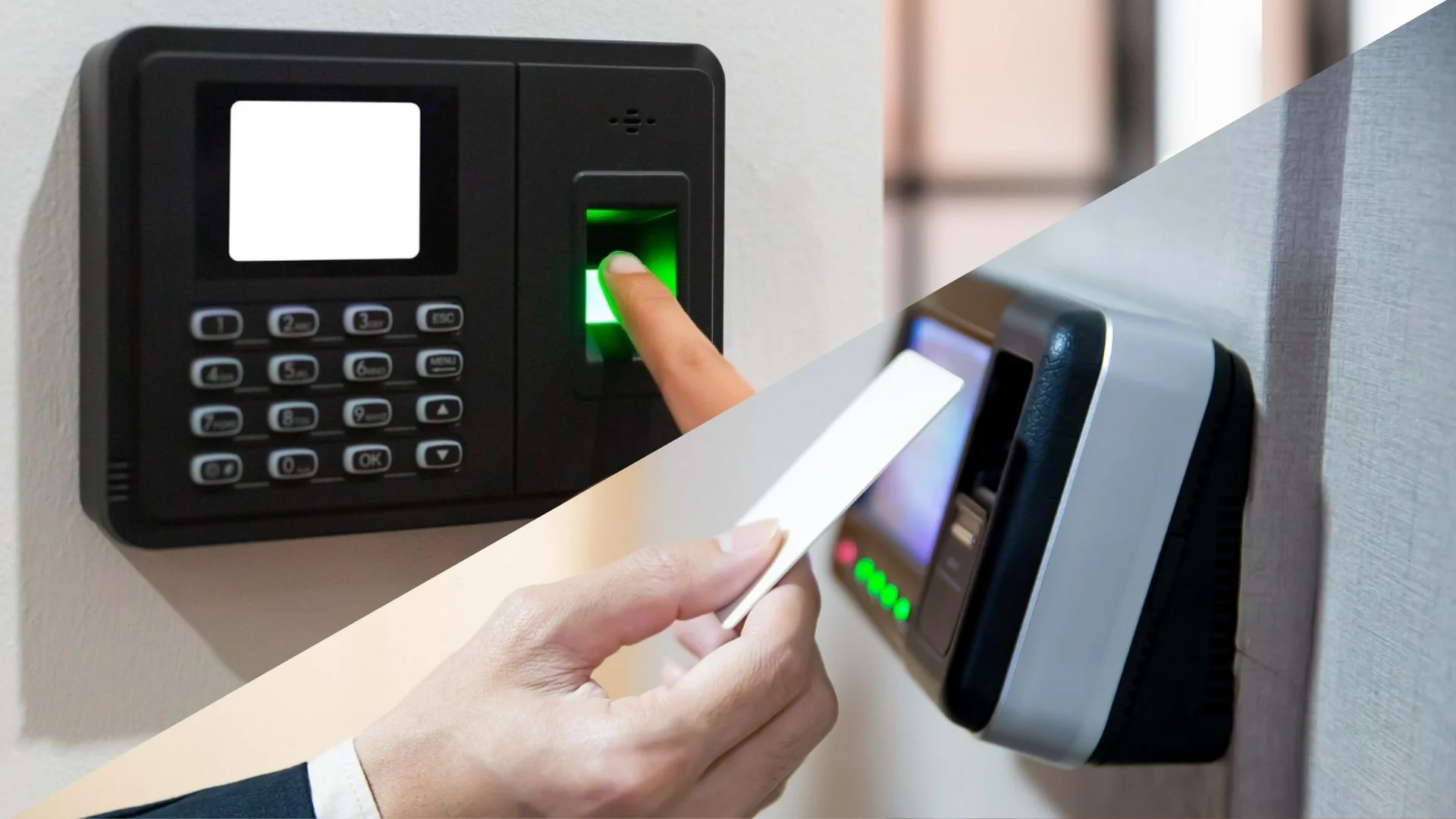
With card-based attendance, the card marks the attendance, not the person. A supervisor hands their card to a colleague. A contractor taps in for an absent worker. The system registers a clean entry, the payroll processes it, and no one's the wiser until the numbers don't add up.
Biometric attendance removes that possibility entirely. The fingerprint belongs to the individual, and it cannot be shared, transferred, or forgotten at home. When Gujarat’s government school system deployed biometric attendance across 10,000+ schools using Access Computech’s solution, proxy attendance became structurally impossible.
For large workforces, especially those with contractual labour or multi-shift operations, that's not a minor operational improvement. It's a fundamental change in how you can trust your own data.
Card systems record entry and exit events accurately when the cards are present and functioning. The problem is everything outside that narrow condition, such as lost cards, damaged cards, forgotten cards, cards shared between employees, cards used at the wrong terminal.
Each of these creates exceptions that someone has to manually resolve. In a large enterprise, that exception-handling load adds up to meaningful HR and admin overhead every month.
Biometric systems capture accurate data directly and consistently. There's no card to lose, no badge to forget, and no manual override required for everyday edge cases. The data that flows into your payroll and compliance reports is cleaner at the source.
Card-based systems are faster and cheaper to deploy initially, and they work well in environments where the user population is relatively stable, the access points are fixed, and the compliance bar is low.
Biometric systems require upfront investment in the right hardware and setup, but they pay that back in operational reliability. The FP900 and SentinelFP, for instance, are built for high-footfall environments with fast fingerprint recognition and smart card support, giving organisations the option to run both modes during a transition period without replacing infrastructure.
For enterprise environments with shift-based workforces, multiple entry points, or contractor-heavy operations, biometric attendance is increasingly the practical choice, not the premium one.
This is where the conversation often ends, but it's worth addressing directly. The value of either system depends heavily on how cleanly it feeds into downstream processes like payroll, leave management, and statutory compliance reporting.
Modern biometric attendance systems integrate with HRMS platforms, generate automated reports, and flag anomalies in real time. Card systems can do this too, but the data quality they provide is only as good as the discipline with which cards are managed.
Access Computech's Employee Attendance Recording System (EARS) connects attendance hardware to centralised dashboards with real-time sync, custom reporting, and notification workflows, so the data doesn't just get captured accurately, it gets used effectively.
Card-based systems are simpler to start with and easier to manage for small, stable teams. For growing enterprises, multi-location operations, or any organisation where payroll accuracy and compliance reporting are a priority, biometric attendance delivers meaningfully better outcomes over time.
There is a bit more upfront investment, but the returns are worth it.
If you'd like to understand which attendance setup fits your workforce and operational context, we're happy to help you work through it.